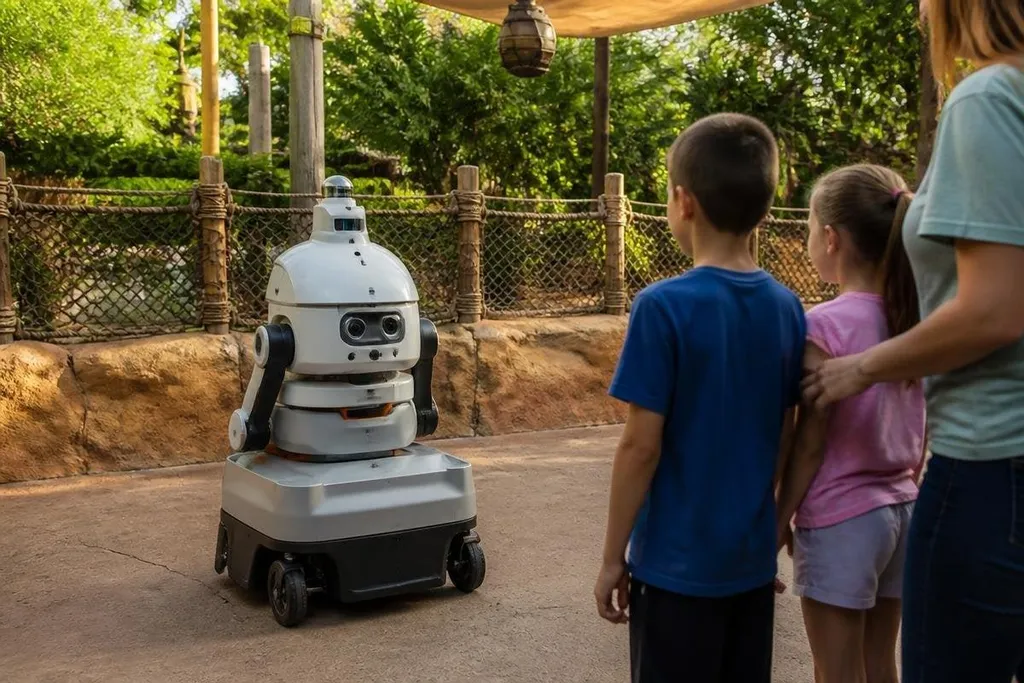
A theme park robot can move through a ride area, perform the same motion for hours, or react to guests without a human inside it. The useful question is where that machine adds a real attraction, and where a person still does the job better.
- Robots can repeat timed movements with steady control
- Sensors help machines detect people, barriers, and ride conditions
- Safety checks matter more than a robot’s appearance
Robots add motion that guests can approach
Theme parks already use motors, tracks, lifts, lighting, and sound to control what guests see. A mobile robot adds movement that can leave a fixed stage, so the character or prop can travel through a space near the audience.
That movement changes the design problem. The robot needs sensors to detect people and objects, software to choose a safe path, and brakes or other hardware to stop when something goes wrong. A machine that works on an empty test floor may need a different setup when children, loose bags, and changing crowds enter the same area.
The robot’s body also affects the attraction. A small machine can move through a queue or indoor scene, while a larger platform needs wider paths, stronger floors, and a clear recovery plan if it stops. The attraction team must design the route around those limits from the start.
Repetition is where robots make sense
A live performer brings timing and judgment that a machine may not match. Robots have a different strength: they can repeat a planned movement without tiring, provided the motors, battery, and control software stay within their limits.
That can help with short scenes, moving figures, timed greetings, or props that need to return to the same position many times each day. The machine still needs inspection. Repeated motion puts stress on joints, cables, gearboxes, and attachment points, so maintenance becomes part of the attraction rather than a task after opening hours.
Battery power adds another limit. A mobile robot may need charging, a battery swap, or a wired connection. Each choice affects the scene, the work schedule, and the time a ride can remain open. A robot that runs out of power during a performance creates a service problem before it creates a story moment.
A charging cable, battery swap, or spare unit can change how staff manage the crowd during a reset. Theme park robotics coverage can track the robot’s run time, reset process, and staff role before the next problem: keeping visitors safe around a moving machine.
The hard part is safe public contact
Guests don't behave like test equipment. They stop in unusual places, reach toward moving parts, and may not understand a warning sign. A robot near the public needs limits that work without asking each guest to follow instructions perfectly.
Those limits can include low speeds, force limits, soft outer panels, restricted zones, emergency stops, and staff controls. Cameras and other sensors may help the robot detect a person, but detection alone doesn't make contact safe. The attraction still needs a response when a sensor is blocked, a network link drops, or the robot receives a command at the wrong time.
Privacy also matters when cameras record people. The park must explain what the system records, how long it keeps that data, and who can access it. A moving character may draw attention, but the control system behind it carries much of the public risk.
A robot changes the work around an attraction
A park may need technicians who can check motors and sensors, staff who can take control, and operators who can explain a delay to guests. That work can be harder to see than the robot itself, yet it decides whether the attraction runs for a full day.
I'd be cautious about any attraction that treats the robot as the whole experience. The machine needs a clear job: repeat a motion, move through a defined route, or create a response that a fixed prop cannot give.
Practical checks before deployment
Use this list when reviewing a robot attraction:
- Define the robot’s task in one sentence, then remove features that don't serve it.
- Map every person, barrier, cable, door, and service route near its path.
- Set the stop behavior for lost power, blocked sensors, network failure, and manual override.
- Record battery time, inspection intervals, part life, and the time needed for a safe reset.
- Test with staff, bags, children’s heights, and crowded paths rather than an empty floor.
- Decide who can stop the robot and how guests will receive a clear explanation.
Theme parks should add robots only after proving each one can run safely through a full operating day. Until parks publish that service data, the strongest attraction is the one with a clear task, a tested stop plan, and a maintenance team ready when the machine goes quiet.